
Compassion v. Empathy
& a Prompt on Increasing Tension

I’ve just finished a four month advanced IFS training with IFSCA, the Canadian IFS institute. I trained with them last year too. The cohorts are small. There were twenty of us, from all over the world. I feel so lucky to have been in this group. Last year’s cohort was also amazing, and we still meet twice a month to discuss practice issues and to practice with each other.
IFS is the kind of modality the therapist or coach must actually practice in order to be able to use it well with others. I have 14 scheduled sessions a month with other practitioners, supervision twice a month, my monthly neuro-affirming group, and clients.
I mostly see weekly clients, but some come twice a month, some monthly. So you can imagine that I have a fairly full schedule, but my days don’t feel busy. I rarely feel stressed out, even when I make my daily government protest calls. In fact, I mostly feel a sense of serenity, in spite of the government, and especially in the woods with my dog.
Actively listening and offering compassion feeds me. Recent studies show that we (humans) don’t suffer overwhelm or burnout from too much compassion. (Here and here are two previous substacks I wrote about compassion.) Empathy can cause burnout, but we can access an unlimited supply of compassion.
Empathy asks us to put ourselves in someone else’s place and to feel their feelings. Compassion is being with, able to offer support. Even without my IFS training, I can offer support the way we all do, by helping to co-regulate. (Of course I had to learn to regulate my own nervous system first. When I struggled with emotional regulation, I confused empathy with compassion. I’d get caught up in feeling with others instead of for them.)
Co-regulating, sharing my calm state to help a dysregulated being become calm, is innate in animals. Many studies have shown how pets reduce our blood pressure. My dog actually hugs me. My friend’s cat snuggles into their neck to stimulate their vagus nerve by purring there.
Coaching, I feel I’ve found my life’s work. And I don’t have to make it happen, the way I had to try to get my plays developed and then produced. Shifting my creative efforts to poetry, I don’t need to work to make that happen either. I write, study, read, revise, get feedback, revise, submit and publish, but there’s almost no heavy lifting involved.
It’s as if I have dialed down what used to be my version of life lived at its loudest and fastest. Now simpler, quieter, and full of ease. This could never have happened without my IFS practice.
If you’re IFS-curious, reach out! I’d love to show you, in a free demo, how IFS can work for you.
THE PROMPT:
Having just written about how I’ve let go of so much tension, let’s shift to narrative storytelling in terms of how does something increase in tension? What can you do to increase the tension in your tales? Think of a rubber band that is more tense when it’s stretched. What adds tension in the body of a character? (Make a list.) If the character is feeling it, chances are the audience will feel it too.
Consider Fear as a way to add tension. Is there something your protagonist fears? Can you make a list of potential fears for your characters? This might be tied to what they Value. Or how they Identify themselves. Internal fears tend to include being exposed as unlovable or unworthy, to be excluded from the clan, or sickness, pain, and death, including the loss of loved ones. Value fears can be about internal worthiness and external performance.
For example, Mrs. Parks will feel worthless if she can’t help her students because she values learning. This fear is tied to her identity as a teacher. And yet, she also fears losing her job, tied to her identity as successful or a breadwinner for her family, and she can’t force her students to learn. When does she make the decision to cheat on the standardized tests?
In this made-up example, I could have stopped at the fear, tied to her identity as a teacher, but that doesn’t lead her to the action she takes. I had to add other fears tied to other identities, and stressors like difficult students who don’t even see the value in trying to do well on the tests. The more I pile on, the more the story takes shape.
Create Stakes by tying potential consequences to fears or piling on little paper cuts of stressors like failures, lack of cooperation in others/the universe, and missing deadlines, accidents, whatever you can invent that can pile up. Tension can increase that way. Fear of Failing or Disappointing others or one’s self could play a part.
Add danger. Get specific. What kinds of dangers are there in the world you’ve built? (Another list.) What are possible actions to take to avoid danger? Sometimes an action that seems to do a person good has negative consequences down the line. Things they didn’t consider when they chose this course of action. What are the potential consequences?
Even something that seems innocuous, like in that book, Fortunately Unfortunately, can help. Here is an exercise, also a great car game to play, where for each thing that happens (good or bad), there’s a (good or bad) consequence. We learn to suspend judgment because so much that seems bad can be spun into something good, or vice versa. It’s great fun and loosens up our ability to create turns in our narratives. Yes, it’s a super silly kids game, but it helps us with flexibility. For example, when a young man finds a horse in the forest (fortunate), he tries to ride it and breaks his leg (unfortunate), when the army arrives looking to make him a soldier, they don’t want him (fortunate), etc. Your turn!
Join Me In Brave Space
Work for a focused hour uninterrupted in a supported community via Zoom. I offer prompts, grounding practices, & courage. After the creative hour, optional discussions about the creative process & craft! Make deeper meaning. Find your groove. Restart after being stuck. Begin &/or bring your projects to completion.
Or use Brave Space as a body-doubling space to get other things done in community (write hard emails, clean out your closets, do taxes).
$5-25 suggested per session. 4x/week! On or off camera. No commitment necessary with lots of accountability! Drop-ins welcome. Try it!
Mondays, Wednesdays and Fridays at 12pm ET with Fast Feedback every Friday; and Sundays at 6pm ET with Sharing Second Sundays at 730pm ET (June 14th).
ACTUAL SCHEDULE: Next Brave Space is Friday 5/29 at 12pm ET. Then Brave Space Sunday at 6pm and Monday, Wednesday and Friday as usual at 12pm ET. Email or reply for a link!
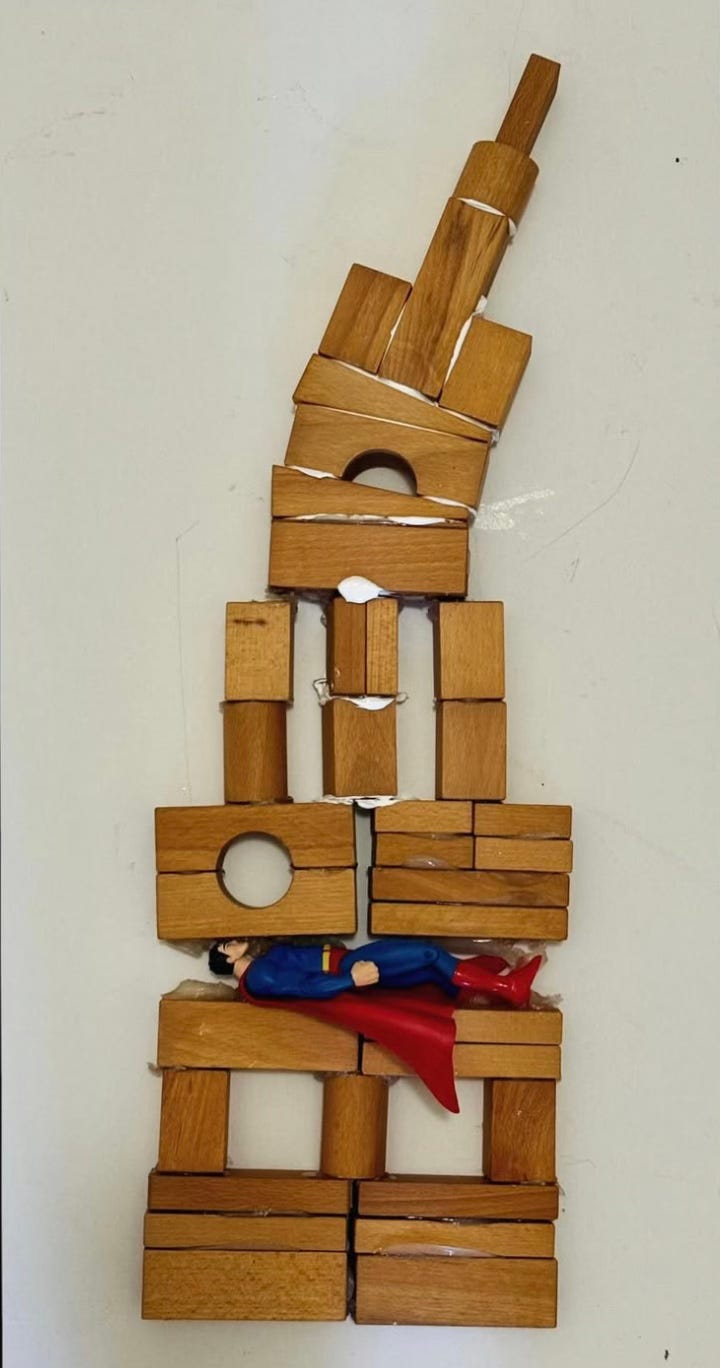
artwork by Scott Sherman at ScottShermanStudio on instagram
NeuroAffirming (NAF) Parts Work Group:
Meets Second Saturdays of each month (June 13th at 12pm ET - time zone converter here) to offer community, parts work experience and support for anyone neurodivergent (inclusive of Autism, ADHD, Audhd, OCD, cPTSD and more).
You do not need an actual diagnosis to participate. Run by Emma and Jess (Level II), both of us Audhd, we are creating non-pathologizing and anti-ableist Parts Work content for healing and ease in neurodivergent systems. Sign up for our link here. Sliding scale from $5-25/session, but no one will be turned away.
Opportunities
SUBMIT NOW to Urbanite Theatre in Sarasota, Florida, taking the first 300 scripts submitted to this website for the 2026 Modern Works Festival.
PlayCo announces applications are now open for a two-week residency (October 24 - November 8, 2026) for two U.S.-based playwrights with Prague’s Švanda Theatre. Playwrights-in-residence will have the opportunity to collaborate on readings of their work translated into Czech, discuss their work in a public forum, and learn about the Czech theatre scene by meeting members of the local artistic community, seeing productions and visiting selected important venues and sites.
These residencies are open to U.S.-based playwrights with a strong interest in international engagement and exchange, who have experience including at least one professionally produced play at an established theatre, as well as other commissions, workshops, readings, or other work with professional theatres. Applications are open today, May 1st, will be accepted until 11:59 pm Eastern on Sunday, June 7.
Free Peer Coaching for Res Artist members. Res Artis is a worldwide network of artist residencies.
Women in the Arts and Media has a newsletter full of opps for stage plays and screenplays. Seriously lots here!
You can also sign up for Audrey Cephaly’s Substack, How to Playwright where she keeps better track of the opps.
POLITICAL ACTION:
Get Involved:
What you need to know about ICE.
Fight for the National Endowment for the Arts (NEA).
Writers for Democratic Action.
READ/SUBSCRIBE:
Chop Wood, Carry Water - Jess Craven’s focus on political action includes good news to help sustain us!
ABORTION EVERY DAY a substack by Jessica Valenti - support real research about what’s really happening. MEN, this is scary shit, and your support is needed and appreciated!
THE CRUCIAL YEARS a substack by Bill McKibben - climate change and ways to understand it and to actually do stuff about it.
ERIN in the Morning, by Erin Reed - news from the trans community.
The Intercept, 972mag, Aljazeera, and Mondoweiss - independent news.
AMAZING spreadsheet! Reach anyone in the government directly, right here! Bookmark it and use it!
DONATE:
STAND WITH MINNESOTA HERE
Give to the Middle Eastern Children’s Alliance
Give to Doctors Without Borders
6 Ways to Support Palestine
Donate for Civilians in Palestine
I appreciate the distinction you make between empathy and compassion, Emma. I'm sure it will prevent a lot of burnout for your readers, including me.
I’m thrilled for the ease you’re finding, and am working towards allowing that, too.
What is IFS, Emma? I am an empath and that aspect of me, although helpful when directing, can become an obstacle to being truly effective in other walks of my life. I’d like to find my way to compassion first, as it is not as debilitating, not an obstacle to action that needs to be overcome.